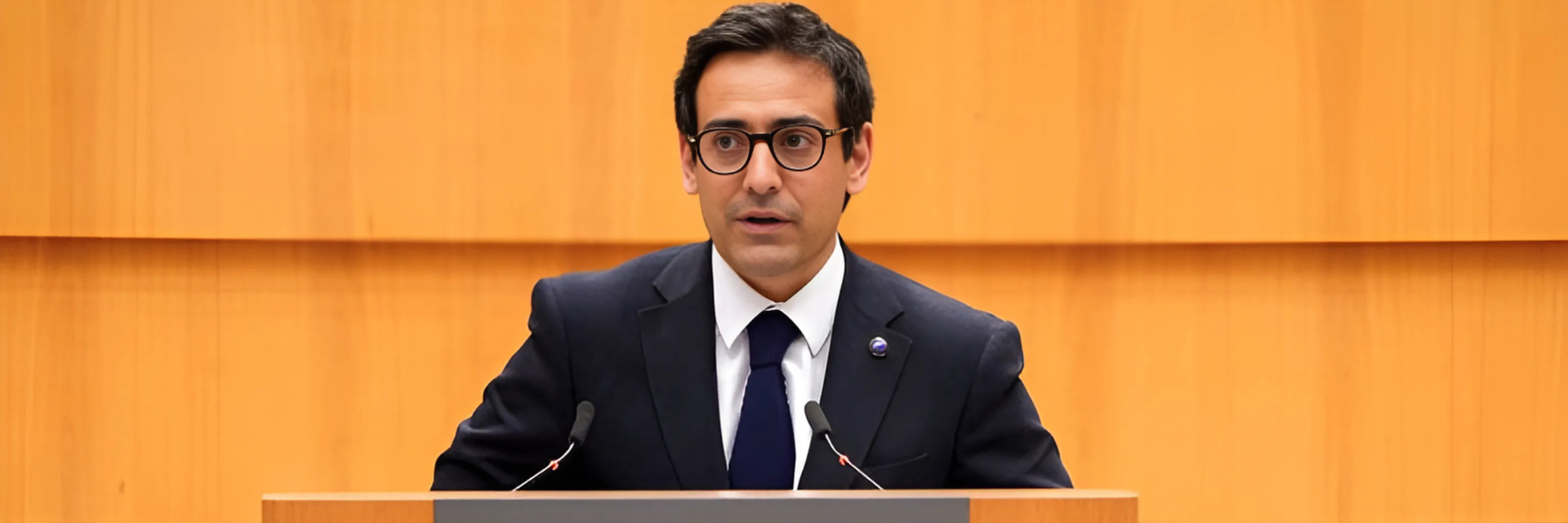
On 21 May, the European Parliament held a plenary debate on the European Commission’s newly unveiled Single Market Strategy, a wide-ranging initiative aimed at removing internal barriers, simplifying regulation, and strengthening the EU’s economic backbone.
The strategy received strong cross-party support, with MEPs calling for targeted action in key areas such as energy, telecoms, financial services, and the mutual recognition of professional qualifications. A special focus was also placed on empowering SMEs and mid-caps, along with concrete plans to reduce administrative costs by €400 million annually.
The debate underscored a growing consensus: the Single Market must evolve to meet today’s challenges, from global competition and economic resilience to innovation and sustainability.
To access the full summery of the debate, please fill in the form below.
.
Image Source: European Parliament Multimedia Centre
.
.
.
Joshua Wells: If we imagine someone who is Gen Z today reaching their 50s, what does the climate landscape look like for them? How different is it from today? Andrew Russell: By the 2050s, flood risk is g…
Ahead of this year’s Labour Party Conference, Dods Content Manager Nathaneal Amos-Sansam spoke with Emma Burnell to gauge the party’s mood and hear about what those attending the conference should look out …
Ahead of this year’s Liberal Democrat Conference, Dods Content Manager Nathaneal Amos-Sansam spoke with Lord Mark Pack to gauge the party’s mood and hear about what those attending the conference should loo…
How should the Government compare future benefits to present ones? Are they of equal value? Not according to the Treasury. If we accept the idea that future benefits are not equal to present ones, then how much…
To kick off our new Gen Z blog series, part of our ongoing research collaboration with Queen Mary University of London, Dr Joshua Wells speaks to Dr Joseph Hoover about the challenges facing young people today …
It is no secret that Andy Burnham has pronounced devolution as central to his strategy for the country. Burnham kickstarted his tenure as Prime Minister by reorganising Whitehall to support that devolution agen…