
Andy Burnham’s promise to deliver “good growth in every postcode” is an easy phrase to remember. The question is what this means in practice, and whether it is actually a new idea.
Andy Burnham’s 29 June speech placed devolution at the centre of his leadership pitch, promising what he called the “biggest rebalancing of power our country has seen” and setting out plans for a Manchester-based “No. 10 North”. To understand what Burnham actually believes about devolution – the transfer of powers and funding from central government to local or regional bodies – it helps not only to review his latest remarks, but to also look back at his previous actions.
Not Starting From Scratch
The current wave of English devolution dates back to 2014, when then-Chancellor George Osborne began offering city-regions a trade: adopt an elected mayor, and Whitehall would hand over powers on transport, housing, planning and skills. Greater Manchester took that deal first, agreeing what was described as a “ground-breaking devolution deal” in November 2014. The region held its first mayoral election in 2017, which Burnham won.
Other city-regions signed similar deals over the following decade, and the combined-authority model this created has been maintained and extended by governments of both parties since. The current government, for example, accepted six areas onto its Devolution Priority Programme in 2025, with Cumbria and the Cheshire and Warrington combined authorities formally established from that programme in February 2026.
Not every deal has landed smoothly – Norfolk’s council leader withdrew from its devolution agreement the same month, in a dispute over elections – but the broader pattern, of governments continuing to extend the model that Osborne started in 2014 has held.
That context matters when reading Burnham’s 29 June speech. The question isn’t whether Burnham claims to believe in devolution – both he and plenty of allied politicians say he does – but what he’s specifically said and done about it, and for how long.
That turns out to be a longer and slightly more complicated story than the speech alone suggests.
Confessions of a Former Sceptic
Before Manchester, Burnham’s relationship with devolving power looked different to how he approaches it today.
As Health Secretary, he set out the Shaping the Future of Care Together green paper in July 2009, which became the Building the National Care Service White Paper in March 2010. Both proposed a care system that would be free at the point of need and funded through a national system of shared contributions, rather than through funding and provision that varied by local authority. That’s a national funding model, not a devolved one: an entitlement guaranteed and paid for centrally, rather than a transfer of decision-making power to local government.
Burnham held a consistent position on this throughout his time in health policy. Five years later, as Shadow Health Secretary in 2015, when Greater Manchester was first in line to gain joint control over £6bn in annual NHS and social care spending, Burnham said he wouldn’t have offered the deal, warning of a “‘swiss cheese’ effect in the NHS” which, in turn, would cause a “two-tier service and challenge the notion of a National Health Service”.
The Mayor Who Changed His Mind
Becoming mayor in 2017 put Burnham on the other side of the argument he had been making as a minister.
His campaign that year was built around a pro-North, anti-centralisation case: his stance was that Westminster had systematically underinvested in the regions, and that a regional mayor with the right powers could prove the alternative. Five years after warning devolution could risk creating a “two-tier” system, he was now campaigning on a platform for further devolution of power.
That case had its biggest public airing in October 2020, during the Tier 3 COVID standoff. Burnham had asked for £65m to support the region through the pandemic restrictions; the Government offered £22m. Shown that final figure live on air, Burnham called it “brutal” and “frankly disgraceful”, in a clip that went on to reach 3.7m views on Twitter. It earned him the “King of the North” title from supporters and accusations of running “the Andy Burnham show” from critics.
A less publicised version of the same argument played out three years later on skills policy. Greater Manchester’s 2023 Trailblazer Devolution Deal gave the combined authority oversight of post-16 technical education, but stopped short of devolving control over 16-19 funding, as Burnham had originally sought. He used to the secured powers to launch the Greater Manchester Baccalaureate (MBacc), a technical pathway intended to sit alongside the existing English Baccalaureate (EBacc), giving school-leavers and equally weighted path to skilled careers as well as university.
The Department for Education warned that the initiative risked creating an “unequal system and narrow the opportunities available to young people”, while Burnham said government backing had been “slower than I’d hoped” and criticised the EBacc’s influence on schools. The disagreement later took on a different complexion when, in November 2025, the Government confirmed that EBacc would be removed from school performance measures. Burnham said that the decision showed the “pendulum swinging back” towards the approach he had previously advocated.
By 2026, Burnham’s method of running Greater Manchester with an increasing number of devolved powers had a name: “Manchesterism”.
Burnham described the “main foundation of the success of ‘Manchesterism’” as “the creation of a different political culture – the polar opposite of the Whitehall and Westminster way,” calling it “business friendly socialism” aimed at more local public control over housing, utilities, transport and education. The same rationale resurfaced almost word for word in his 29 June leadership speech, where he pledged that all parts of the UK would be “able to take greater public control of essential services like water, housing, energy and transport, learning from the model that has transformed our bus networks here in Greater Manchester.”
Whether Manchesterism can be exported and applied nationally is another question.
The Local Government Chronicle has questioned how far a model built over nine years, with such a long head start on local institution-building, can simply be picked up and applied elsewhere. Burnham made the case that it could anyway, co-authoring a 2024 book with Liverpool City Region Mayor Steve Rotheram, Head North, which argued for full devolution across England – where local leaders would hold power over core domestic policy, with the ability to raise their own funds too.
From City Hall to Whitehall
The 29 June speech was not Burnham’s first attempt to set out this argument to a national audience. A month earlier, Mainstream – the soft-left Labour network that Burnham backs – published ‘The Productive State: A Framework for Manchesterism’, making the case that Greater Manchester’s approach to public control of essential services should become national policy.
Burnham’s speech largely echoed the argument and agenda set out in the Mainstream report.
The No.10 North programme announced appears to be the vehicle to put that argument into practice, as the report states: “Designing arm’s-length and devolved public corporations is partly a response to this: institutions insulated from the conservatism of Whitehall culture, governed by mandates that make public interest the explicit criterion.”
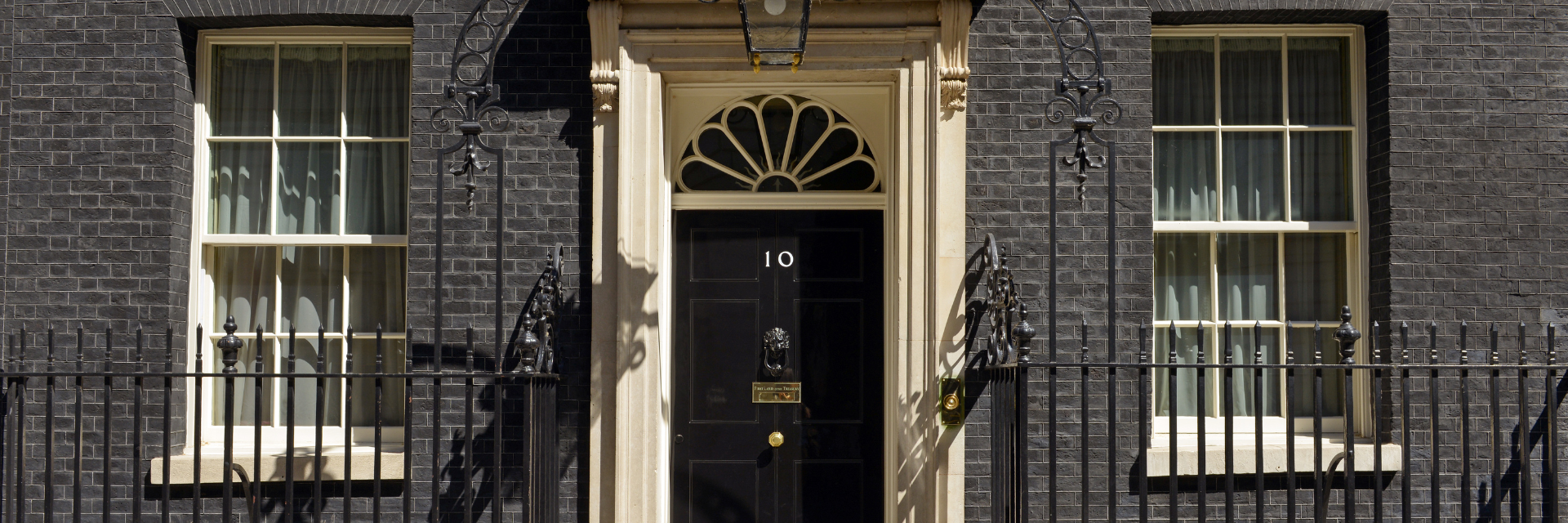
In his speech, Burnham described No. 10 North as the “nerve centre of a rewired Britain” and “the conduit through which we redistribute power and resources across the UK” – an extension of the prime ministerial operation, based in Manchester rather than London, something no previous government has done.
He set the new office three formal jobs: reform of essential utilities, reindustrialisation, and the regeneration of places. Burnham has confirmed that Caroline Simpson – currently chief executive of the Greater Manchester Combined Authority, and previously chief executive of Stockport Council, which Burnham has separately cited as a model of public-private partnership – will lead it.
The policy programme underpinning the pledge combines greater public control with a wider transfer of powers to mayors. Burnham has called for greater public control of water, energy, housing and transport, including what he described as the “biggest council house-building programme since the post-war period”. He said vacant public land would be used to reduce costs, although it remains unclear whether that land would be built on or sold to help fund the programme.
The devolution agenda would also extend to employment support and post-16 skills funding, building on the trailblazer model already operating in Greater Manchester and the West Midlands.
Health provides the clearest blueprint: arrangements in Greater Manchester and South Yorkshire were already progressing before the Labour leadership contest began, and in March 2026 the Government announced that the new NHS Integrated Care Board chairs would also serve as their respective mayor’s health commissioner – a change Burnham called “a landmark moment”.
The policy architecture may be taking shape, but the fiscal room to deliver it is tight. As a leadership candidate, Burnham has committed to sticking within Labour’s existing fiscal rules and manifesto tax pledges – a more cautious position than the local revenue-raising powers he and Rotheram called for in Head North. That gap has an immediate complication too: the outgoing government’s Defence Investment Plan has left a further £4.7bn to be confirmed at the 2026 Budget, which Burnham has committed to funding in full, on top of everything else.
The Fixed Points
Whatever Burnham himself has proposed, several factors are already settled and will shape how any devolution agenda plays out.
The pace of change to the mayoral map is one of them. The English Devolution and Community Empowerment Act 2026 does not give ministers the power to create new mayoralties without the consent of the local authorities involved – a power the government tried to secure and lost after defeat in the House of Lords. In practice, that means devolution can’t simply be handed down from Downing Street – councils on the receiving end have to agree to it. Where a council is controlled by a different party, or opposed to reorganisation on principle, that gives it real power to slow things down, whoever is in No. 10.
Notably, the 29 June speech itself focused on deepening powers in places that already have devolution deals, rather than proposing new mayoralties elsewhere – consistent with that constraint, even if the speech didn’t address it directly.
Scotland and Wales are a second open question, and reactions since 29 June have cut both ways. Scottish Greens MSP Kristopher Leask called the speech “big on rhetoric but short on policy” and aimed at “the English regions”, with the devolved nations “treated as an afterthought.” The criticism sharpened a week later when WalesOnline reported that an opinion piece offered by Burnham’s team was a reused version of articles written for Scotland and London. The organisation declined to run it for being “confused about where power and responsibility lies in Wales” – citing pledges on housing and education, both already devolved to Cardiff. Not every Welsh voice has been as critical: Labour MS Huw Thomas has argued the approach could give Wales “a chance to do devolution differently.”
The remaining question is institutional: how much authority No. 10 North actually ends up with over policy areas the Treasury and the Ministry of Housing, Communities and Local Government currently handle, versus operating within Whitehall’s existing structures.
For nine years, Burnham has argued – as a local government leader – that Whitehall was too centralised and too reluctant to devolve money and power, constraining regional growth. He is now set to move to the centre, into Whitehall. The same departmental structures and Treasury controls he has spent nearly a decade criticising will therefore be the mechanisms through which he must deliver his own devolution agenda. Whether that changes what Burnham is able to do is an open question his premiership will answer.
Burnham’s promise of “Good growth in every postcode” was much easier to make than it may prove to deliver.