
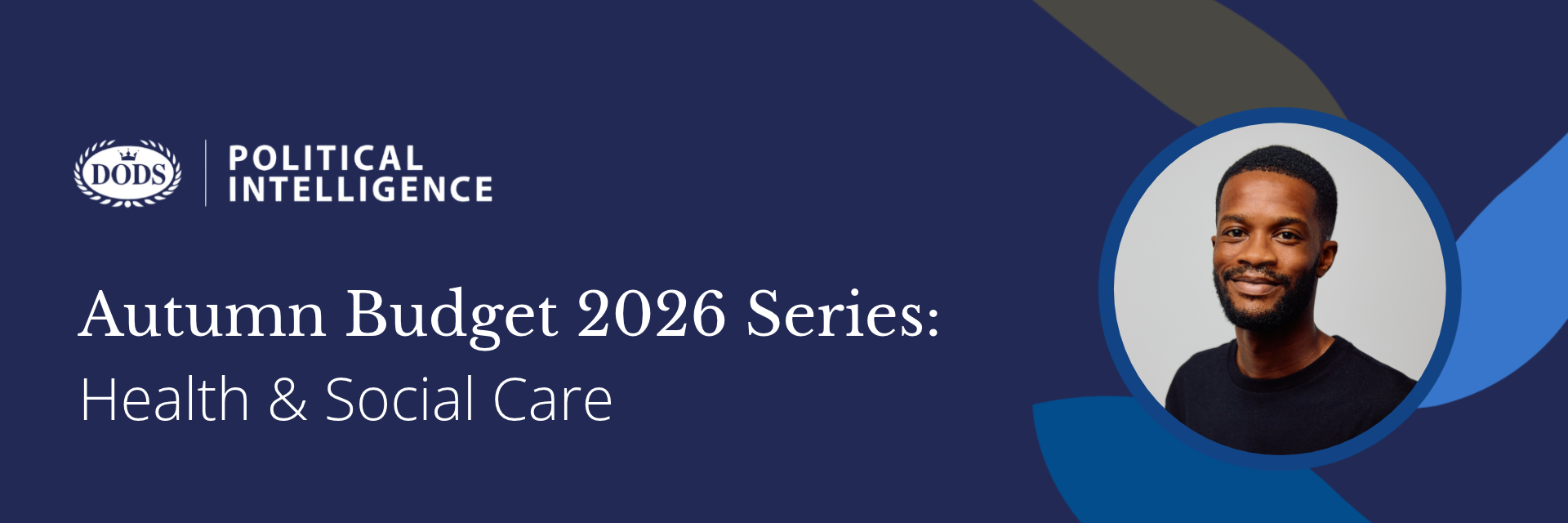
Joshua Opeaye:, Political Consultant for Health and Life Sciences at Dods, examines the key announcements, outstanding policy questions and what the Budget signals for the future of the sector.
What are the key takeaways for your sector?
Joshua Opeaye: Despite the absence of any landmark announcements in the Autumn Budget 2026 concerning the Health and Social Care sector, there were several funding announcements that are worth examining. These include the Chancellor confirming that public sector services will receive an extra £40bn a year for day-to-day spending and over £1bn will be invested into life sciences by private companies, backed by £70m from the Government.
Healey confirmed that the Government would also launch a review into the productivity of the NHS, rounding up a fairly uneventful Budget from a health perspective. While the additional day-to-day funding may help alleviate immediate operational pressures, it is unlikely to deliver the structural transformation needed across the NHS, particularly given the absence of substantial new capital investment. Nevertheless, it may help ease immediate running pressures. The funding commitments announced for life sciences represent a notable boost to the sector and sign of the commitment to strengthening research and development, unlocking greater private investment and support the delivery of the Life Science Plan. Prior to the Budget, Health Secretary Yvette Cooper announced plans for the first legally binding Fair Pay Agreement for care workers which would have been a significant step towards improving pay and conditions across the sector.
However, the absence of any specific commitments to the Fair Pay Agreement in the Budget suggests that its implementation may remain a longer-term ambition rather than an immediate priority. This raises questions about the extent to which the Budget has meaningfully advanced the Government’s wider health and social care ambitions.
What has the Government not sufficiently addressed in the Budget for your sector?
Joshua Opeaye: Perhaps the most pressing issue left insufficiently addressed by the Budget is the ongoing pressures facing adult social care, particularly concerns surrounding its long-term financial sustainability.
Whilst the Fair Pay Agreement will offer improvement to the working conditions of care workers, significant workforce shortages were omitted. Furthermore, questions still remain over the long-term financial sustainability of the health and social care sector when considering the current pressures on the service, workforce capacity and social care provision.
Furthermore, the lack of investment in primary care is particularly concerning given the Government’s long-term ambition to shift care from hospitals into community settings, raising questions about how this transition will be delivered in practice.
Although the Government has communicated that the Mental Health Strategy and NHS Workforce Plan will be delivered before the end of the year, stakeholders and industry professionals will be looking for need more to be delivered from an investment standpoint to answer questions about the short-term sustainability of the NHS and social care.
From a life sciences perspective, the Budget also failed to address several wider industry priorities, including additional funding to support the implementation of medicines reforms, greater investment in health data, and the inclusion of capital expenditure within R&D tax credits, all of which were recommended by pharmaceutical stakeholders such as ABPI. The omission of these priorities raises questions about the Government’s commitment to strengthening the competitiveness of the UK’s life sciences sector.
Have the Government’s priorities changed in your sector? Why?
Joshua Opeaye: The Budget does not appear to signal a shift in the Government’s health and social care priorities, with the 10-Year Health Plan remaining central to its long-term ambitions for transforming the healthcare system. This includes the three key shifts from hospital to community-based care, from analogue to digital services, and from treating sickness to preventing ill health. In terms of social care, improving the conditions of care workers through the Fair Pay Agreement was a priority before the Budget and this does not appear to have changed. Andy Burnham’s plans to deliver a high-quality National Care Service to England were reaffirmed by the budget, which will be achieved using savings from the adjustment of the triple lock.
Further, the Casey Commission which will assess the state of adult social care, is now expected to report in 2027, despite an initial commitment to publish its first-phase findings before the end of 2026. Its recommendations are likely to play a significant role in shaping the Government’s future priorities and approach to adult social care reform.
Any additional reflections?
Joshua Opeaye: The absence of substantial new funding commitments for health and social care may reflect the wider fiscal pressures facing the Government, which have constrained its ability to allocate additional resources to the sector. Instead, the Budget suggests a continued focus on delivering existing long-term policy commitments, such as the NHS 10-Year Health Plan, rather than introducing significant new initiatives.
While investment in AI and innovation, announced ahead of the Budget, has the potential to drive improvements across the sector, technological advancements alone will not resolve longstanding challenges relating to workforce shortages, service capacity and rising demand.
Without sustainable funding to support the delivery of these ambitions, there is a risk that the gap between the Government’s policy objectives and their implementation will continue to widen.
Attention will now turn to forthcoming policy commitments made by Andy Burnham and Yvette Cooper such as the Mental Health Strategy and the NHS Workforce Plan, both of which had been promised to be delivered before Christmas.